


How do AC DC converters work? An AC-DC converter is a power conversion device that transforms alternating current (AC) from the electrical grid into direct current (DC) required by electronic devices. Since household and commercial power is normally supplied as AC, while many electronic products operate on low-voltage DC power, AC to DC conversion is an essential part of modern electronic power systems.
An AC DC converter can convert a wide AC input voltage into a stable DC output suitable for equipment such as routers, surveillance cameras, LED lighting, consumer electronics, industrial control equipment, and other low-voltage electronic devices.
Depending on the application, an AC DC converter may be designed as an external AC DC adapter, an internal power supply board, or a customized AC-DC power supply integrated into electronic equipment.
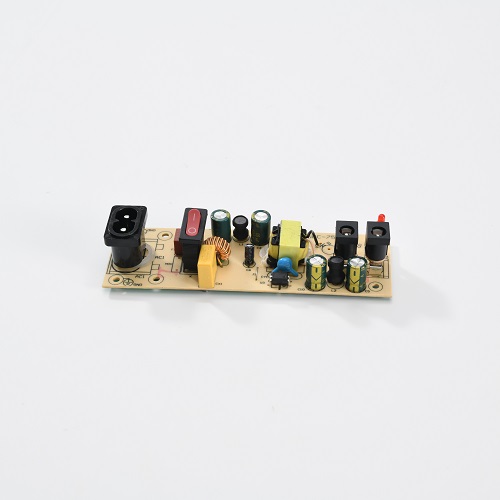
What Is an AC DC Converter?
An AC DC converter is an electrical device that converts alternating current into direct current. The AC input may come from a household wall outlet, industrial power system, or another AC source, while the DC output is designed according to the requirements of the connected equipment.
For example, a device may receive AC 100–240V from the mains and require 12V DC for operation. An AC to DC converter performs the necessary electrical conversion and provides a regulated DC output.
Common AC DC power conversion products include:
AC DC Power Adapter
AC DC Adapter
AC DC Power Supply
AC DC Power Board
AC to DC Converter
AC DC Switching Power Supply
Embedded AC DC Power Supply
The specific design depends on the required output voltage, current, power, efficiency, size, installation method, and protection requirements.
How Do AC DC Converters Work?
The working principle of an AC DC converter can generally be divided into several stages:
AC Input → Rectification → Filtering → Voltage Conversion → Regulation → DC Output
Each stage performs a different function to transform mains AC electricity into usable and stable DC power.
AC Input
The process begins when the AC DC power supply receives alternating current from the electrical grid.
For many consumer and commercial applications, the input may be AC 100–240V at 50/60Hz. A wide input voltage range allows an AC DC adapter to operate across different power environments.
The input stage may also include components designed to reduce electrical interference and protect the converter from abnormal input conditions.
Rectification
The next stage is rectification.
AC voltage continuously changes direction, while DC voltage flows in one direction. A rectifier circuit, commonly based on diodes, converts the incoming AC waveform into a pulsating DC waveform.
This process is an important step in AC to DC power conversion, but the resulting voltage is not yet smooth enough for most electronic devices.
Filtering
After rectification, the pulsating DC voltage passes through a filtering circuit.
Capacitors and other filtering components help smooth the rectified waveform and reduce voltage fluctuations or ripple. The goal is to create a more stable DC voltage for the following conversion and regulation stages.
Effective filtering is important for electronic devices that require relatively clean and stable power.
Voltage Conversion
The converter then adjusts the electrical voltage to the level required by the application.
In modern AC DC converters, switching circuits are commonly used to control power conversion efficiently. Depending on the design, the circuit may also include a transformer or other power conversion components.
For example, a power supply may convert a high-voltage DC bus into a lower DC voltage such as 5V, 9V, 12V, 15V, or 24V.
This stage allows the AC to DC converter to provide the appropriate voltage for the connected electronic equipment.
Voltage Regulation
After voltage conversion, the output needs to remain stable even when the input voltage or load changes.
A feedback control circuit monitors the output and adjusts the switching or conversion process to maintain the desired voltage.
For example, a 12V AC DC adapter is designed to provide a stable 12V DC output for equipment that requires a 12V power source.
Stable voltage regulation helps prevent excessive voltage fluctuations that could affect electronic components or equipment operation.
DC Output
Finally, the regulated DC power is delivered to the connected device through an output connector, cable, terminal, or integrated circuit connection.
At this stage, the AC electricity from the mains has been converted into usable DC power.
The complete process can therefore be summarized as:
AC Mains Power → Rectification → Filtering → Switching/Conversion → Regulation → Stable DC Output
What Is the Difference Between an AC DC Converter and an AC DC Adapter?
The terms AC DC converter and AC DC adapter are often used interchangeably, but they can describe products with slightly different applications.
An AC DC converter generally refers to the electrical conversion function or the power conversion device itself.
An AC DC adapter usually refers to a complete external power supply that can be connected to an electronic device through a cable and DC plug.
For example, a wall-mounted or desktop AC dc power adapter may convert AC 100–240V input into 12V DC output for a router, LED system, or surveillance camera.
An AC DC power board, on the other hand, may be installed directly inside electronic equipment.
Therefore, the difference is often related more to product structure and application than to the basic conversion principle.
Types of AC DC Converters
Different applications require different AC DC power conversion designs.
AC DC Switching Power Supply
An AC DC switching power supply uses switching circuits to perform efficient voltage conversion. This type of design is widely used in consumer electronics, industrial equipment, LED lighting, communication systems, and other electronic products.
AC DC Power Adapter
An AC DC power adapter is commonly used as an external power source. It can convert mains AC power into a low-voltage DC output for compatible electronic equipment.
Common output voltages include 5V, 9V, 12V, 15V, 18V, and 24V, depending on the product design.
AC DC Power Board
An AC DC power board is typically designed for internal installation inside electronic equipment.
It can be customized according to the product's required input voltage, output voltage, output power, PCB dimensions, connectors, mounting holes, and protection functions.
Adjustable AC DC Power Adapter
An adjustable AC DC power adapter can provide multiple output voltage levels.
For example, an OEM adapter may support several output options such as 5V, 7.5V, 9V, 12V, and 15V. This type of power supply can be useful when one adapter platform needs to support different electronic products.
What Factors Affect AC DC Converter Performance?
The performance of an AC DC converter depends on several electrical and environmental factors.
Input Voltage Range
A wide input voltage range can make an AC DC converter suitable for different mains power environments.
For international applications, AC 100–240V input is commonly used in external power adapters.
Output Voltage and Current
The output voltage must match the requirements of the connected device.
The output current capacity is also important. An adapter should be capable of supplying the current required by the equipment without exceeding its rated operating conditions.
Conversion Efficiency
Power conversion inevitably produces some energy loss, mainly in the form of heat.
Higher conversion efficiency can reduce energy consumption and heat generation, which is particularly important for products operating continuously or installed in space-limited environments.
Thermal Management
Temperature can affect the reliability and service life of electronic components.
Appropriate component selection, circuit design, heat dissipation, and thermal protection can help an AC DC power supply maintain reliable operation under its specified working conditions.
Protection Functions
Protection circuits are important for both the power supply and connected equipment.
Common protection functions include:
Overvoltage protection
Overcurrent or overload protection
Short circuit protection
Overtemperature protection
The exact protection configuration depends on the AC DC converter design and application requirements.
AC DC Converter Applications
AC DC converters are widely used wherever electronic equipment needs DC power from an AC mains source.
Consumer Electronics
Routers, networking devices, small electronic products, audio equipment, and other consumer electronics may use external AC DC power adapters.
LED Lighting
LED strips, LED controllers, and other low-voltage lighting systems often require DC power. A suitable AC to DC power supply can provide the required voltage from an AC mains source.
Security and Surveillance
CCTV cameras, DVR/NVR systems, alarm equipment, and other security products may require continuous DC power. A properly matched AC DC adapter can provide a stable power source for compatible equipment.
Industrial Equipment
Industrial control systems, automation equipment, sensors, communication equipment, and embedded electronics may require customized AC DC power supplies.
For industrial applications, parameters such as input range, output power, operating temperature, protection functions, installation method, and reliability requirements need to be considered carefully.
Smart Home Devices
Smart home equipment, control systems, electronic locks, sensors, and other connected devices can use compact AC DC power supplies to convert mains electricity into the low-voltage DC power required by internal circuits.
OEM & Custom AC DC Converter Solutions
Different electronic products have different electrical and mechanical requirements. For this reason, standard power supplies may not always be suitable for every project.
An OEM AC DC converter can be customized according to the requirements of the end product.
Possible customization options include:
Input voltage
Output voltage
Output current
Output power
PCB dimensions
Connector type
Cable configuration
Mounting holes
Protection functions
Isolation requirements
Housing design
Product labeling
Packaging
For example, a manufacturer developing an electronic product may require a compact AC DC power board with a specific DC output and customized PCB dimensions. An OEM power supply manufacturer can develop the electrical and mechanical configuration around those requirements.
AC DC Converter Manufacturer & Supplier
Choosing a reliable AC DC converter manufacturer is important for businesses sourcing power supplies for electronic products, industrial equipment, LED systems, and other B2B applications.
A professional AC DC converter supplier should be able to provide more than a standard catalog product. Engineering support, customization, consistent specifications, quality control, and stable production capacity are also important for long-term projects.
As an AC DC power supply manufacturer, we provide power conversion solutions for different electronic applications, including AC DC power adapters, AC DC power boards, adjustable AC DC adapters, and customized OEM power supplies.
Our solutions can be developed according to requirements for input voltage, output voltage, output current, power, protection functions, installation, and other electrical specifications.
Whether you are looking for an AC DC converter supplier for wholesale purchasing or an OEM partner for a new electronic product, providing the required electrical parameters and application details can help determine the most suitable power solution.
FAQ
How do AC DC converters work?
AC DC converters work by transforming AC electricity into DC power through several stages, typically including rectification, filtering, voltage conversion, and voltage regulation. The regulated DC output is then supplied to the connected electronic device.
Why do electronic devices need AC to DC converters?
Many electronic circuits operate on low-voltage DC power, while electrical grids normally provide AC power. An AC to DC converter bridges this difference by converting mains AC electricity into the DC voltage required by the equipment.
What is an AC DC adapter?
An AC DC adapter is an external power supply that converts AC input from a wall outlet into DC output for an electronic device. It is one of the most common forms of AC DC power conversion equipment.
What is a 12V AC DC adapter used for?
A 12V AC DC adapter provides 12V DC power for compatible equipment. Common applications can include networking devices, surveillance cameras, LED lighting systems, small appliances, and other electronic equipment that requires 12V DC input.
Are AC DC converters customizable?
Yes. OEM and custom AC DC converters can be designed according to requirements such as input voltage, output voltage, current, power, connector, PCB dimensions, protection functions, and installation method.
What protections are commonly used in AC DC power supplies?
Common protection functions include overvoltage protection, overload or overcurrent protection, short circuit protection, and overtemperature protection. The exact protection configuration depends on the product design and application.
How do I choose an AC DC converter?
Start by checking the equipment's required input voltage, current, power, connector, polarity, and operating environment. The AC DC converter should provide the correct output voltage and sufficient current capacity for the connected device.
What is the difference between an AC DC converter and a DC DC converter?
An AC DC converter converts alternating current into direct current, while a DC DC converter converts one DC voltage level into another DC voltage level. For example, an AC DC adapter may convert AC 100–240V into 12V DC, while a DC DC converter may step 12V DC down to 5V DC.