


Yes, most USB wall Chargers convert AC to DC. A typical USB Charger takes high-voltage alternating current (AC) from a wall outlet and converts it into regulated low-voltage direct current (DC) suitable for charging smartphones, tablets, earbuds, power banks, and other USB-powered devices.
This AC-to-DC conversion is performed by an internal power supply circuit. In products such as an AC to DC USB Charging Board or AC-DC USB Charging Board, the circuit typically includes input protection, rectification, voltage conversion, regulation, and USB output functions.
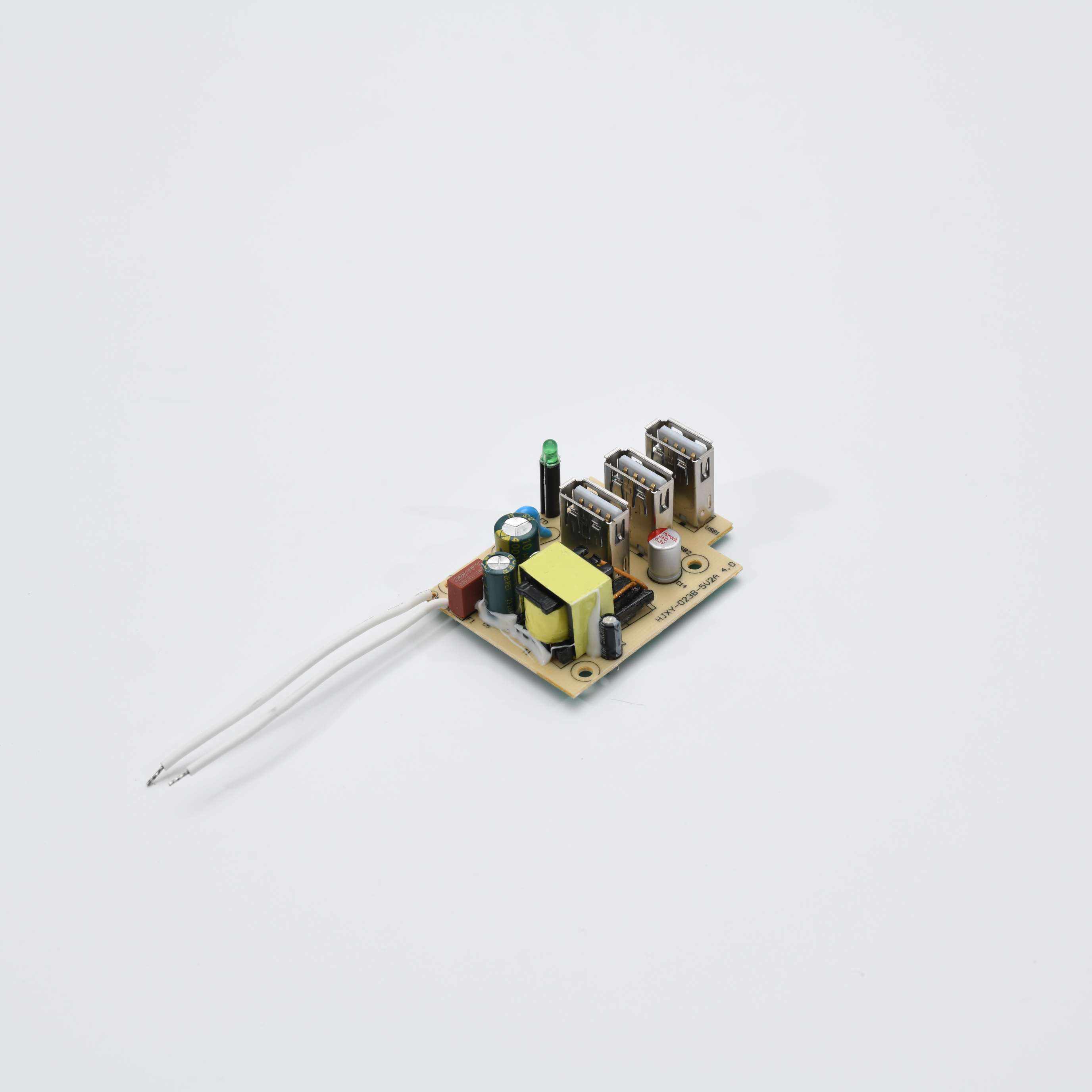
How Does a USB Charger Convert AC to DC?
A USB charger does more than simply change AC into DC. It also reduces the input voltage and regulates the output to provide stable power for connected USB devices.
The basic power conversion process can be simplified as:
AC Input → Rectification → Voltage Conversion → Regulation → USB DC Output
1. AC Power Input
A wall-mounted USB charger typically receives AC power from the electrical grid. Depending on the charger design and target market, the input may support a wide voltage range such as AC 100–240V.
An AC DC USB Charging Board is designed to receive the specified AC input and process it through the onboard power conversion circuit.
2. AC Rectification
The incoming AC voltage is first processed by a rectifier circuit. Rectification converts the alternating waveform into a DC voltage that can be processed by the switching power supply.
3. Voltage Conversion
After rectification, the voltage is converted to a much lower level suitable for USB power applications. Modern USB power supplies commonly use high-frequency switching circuits to achieve efficient voltage conversion in a relatively compact design.
4. Output Regulation
The power supply then regulates the output voltage to maintain stable power under changing load conditions. The exact output voltage and current depend on the charger design and supported USB charging requirements.
5. USB Power Output
Finally, the converted DC power is delivered through a USB-A, USB-C, or another compatible output interface.
Therefore, a typical USB charger can be described as an AC to DC USB Charger Board when referring specifically to the internal circuit board responsible for converting AC input into regulated DC output.
What Is an AC to DC USB Charging Board?
An AC to DC USB Charging Board is an electronic power board designed to convert AC electrical power into regulated DC power for USB charging applications.
It can serve as the internal power conversion section of products such as:
USB wall chargers
USB Power Adapters
Charging stations
Consumer electronics
Smart Home devices
Embedded charging systems
OEM charging equipment
Depending on the design, an AC DC USB Charger Board may integrate the AC input circuit, rectification circuit, switching power supply, feedback control, protection functions, and USB output interface on one PCB.
What Is an AC-DC USB Charging Board?
An AC-DC USB Charging Board is essentially an AC-to-DC power conversion board designed for USB charging applications. The terms AC to DC USB Charging Board, AC DC USB Charging Board, and AC-DC USB Charging Board may be used to describe similar types of products, although the exact circuit configuration varies by manufacturer.
The main purpose is to provide a controlled DC output from an AC input source while meeting the electrical and safety requirements of the intended application.
Typical Components
Depending on the power architecture, a USB charging board may include:
AC input terminals
Fuse or input protection
EMI filtering components
Rectifier components
Switching controller
Transformer or other conversion components
Feedback circuit
Output filtering components
USB connector
Protection circuitry
The actual component configuration depends on the input voltage, output power, efficiency requirements, isolation architecture, form factor, and charging protocol.
What Is an AC to USB Charging Board?
An AC to USB Charging Board is designed to convert AC input power into a DC output suitable for USB-powered devices.
The term is particularly useful when describing compact PCB-based charging solutions that can be integrated directly into a larger product instead of using a complete external wall charger.
For example, an OEM manufacturer may integrate an AC to USB Charging Board into a desk charging station, household appliance, electronic device, or other equipment that requires a built-in USB charging function.
What Is an AC to DC USB Power Board?
An AC to DC USB Power Board is a circuit board that performs AC-to-DC power conversion and provides power through a USB interface.
Compared with a complete USB charger, a power board is typically intended for integration into another product. This allows manufacturers to design their own enclosure, installation structure, connectors, and user interface around the charging board.
AC to DC USB Power Board Applications
Typical applications may include:
Embedded USB charging systems
Furniture charging outlets
Office charging stations
Consumer electronics
Smart home equipment
Automotive accessories
Industrial electronic equipment
What Is a USB AC DC Power Board?
A USB AC DC Power Board generally refers to a compact power conversion PCB that accepts AC input and provides regulated DC power through a USB interface.
These boards can be useful when a product manufacturer needs to integrate AC-powered USB charging into an existing electronic or mechanical structure.
The exact specifications should be selected according to the product's input voltage, required output power, USB interface, installation dimensions, thermal conditions, and applicable safety requirements.
What Is a USB Charging Board?
A USB Charging Board is a circuit board designed to provide charging or power output for USB-compatible devices. Not every USB charging board converts AC to DC.
For example:
| Board Type | Input | Output | Main Function |
|---|---|---|---|
| AC to DC USB Charging Board | AC | DC / USB | AC-to-DC conversion and USB charging |
| AC DC USB Charger Board | AC | DC / USB | AC power conversion for USB devices |
| DC USB Charging Board | DC | DC / USB | DC power management or charging |
| USB Charging Board | AC or DC depending on design | USB | USB charging/power function |
This distinction is important when selecting a charging board for an OEM or embedded application.
Do All USB Chargers Convert AC to DC?
No, not all USB charging devices directly convert AC to DC. The answer depends on the type of USB charger.
A typical wall charger receives AC from a household outlet and therefore needs an AC-to-DC conversion stage. However, a USB charger installed in a vehicle may receive DC power from the vehicle electrical system.
For example, a vehicle-based USB charger may convert:
12V DC → Regulated 5V/Other USB-Compatible DC Output
This type of device is a DC-to-DC converter rather than an AC-to-DC converter.
AC to DC USB Charger Board vs. DC to DC USB Converter
Understanding the difference between these two technologies is important when choosing a USB power solution.
| Feature | AC to DC USB Charger Board | DC to DC USB Converter |
|---|---|---|
| Input | AC | DC |
| Output | Regulated DC / USB | Regulated DC / USB |
| Main function | Converts AC into DC | Converts one DC voltage to another |
| Typical application | Wall-powered USB charging | Automotive and battery-powered equipment |
For example, an AC to DC USB Charger Board may convert household AC power into regulated USB DC output, while a DC-DC USB converter can convert a 12V DC vehicle supply into a lower regulated USB voltage.
Why Is AC to DC Conversion Important for USB Charging?
USB Devices Require Controlled DC Power
USB-powered electronic devices require controlled low-voltage power rather than direct connection to high-voltage household AC power.
The AC-to-DC power supply therefore acts as the electrical interface between the mains supply and the USB-powered device.
Stable Output Voltage
A properly designed AC DC Charging Board regulates its output to provide stable power within its specified operating range.
Electrical Protection
Depending on the design, an AC-to-DC charging board can incorporate various protection functions, such as over-current, short-circuit, over-voltage, and over-temperature protection.
The available protection functions vary by product and should be confirmed from the manufacturer's technical specifications.
What Should You Consider When Choosing an AC to DC USB Charging Board?
Input Voltage
Confirm the AC input range required by the application. Some boards are designed for a specific AC input, while others support a wider input range.
Output Voltage and Current
The output voltage and current should match the requirements of the target USB device and charging system.
Output Power
Calculate the required output power based on the maximum load. The board should have sufficient capacity for the intended application.
USB Interface
Determine whether the product requires USB-A, USB-C, or another connector configuration.
Charging Protocol
If fast charging is required, compatibility with the relevant USB charging or power-delivery protocol should be considered.
Safety and Isolation
For mains-powered applications, the design should address appropriate insulation, isolation where required, creepage and clearance, protection, and applicable regulatory requirements.
Size and Installation
An embedded AC to DC USB Power Board needs to fit the available installation space. PCB dimensions, component height, mounting holes, connector position, and thermal conditions should all be considered.
Can an AC to DC USB Charging Board Be Customized?
Yes. An AC DC USB Charger Board can be developed or customized for specific OEM applications, depending on the manufacturer's capabilities and the project's technical requirements.
Potential customization areas include:
AC input voltage range
DC output voltage
Output current
Output power
USB-A or USB-C interface
PCB dimensions
Connector location
Protection functions
Mounting holes
Electrical isolation architecture
Housing or enclosure integration
For OEM projects, the board should be evaluated as part of the complete product rather than as an isolated component.
FAQ About AC to DC USB Charging Boards
Do USB chargers convert AC to DC?
Yes. Most wall-powered USB chargers convert AC from a mains outlet into regulated low-voltage DC for USB devices.
What is an AC to DC USB Charging Board?
An AC to DC USB Charging Board is a circuit board that converts AC input power into regulated DC power for USB charging applications.
What is the difference between an AC and DC USB charger?
An AC-input USB charger receives alternating current and converts it into regulated DC. A DC-input USB charger receives DC directly and may regulate or convert it to the required USB output voltage.
Is an AC-DC USB Charging Board the same as a USB charger?
They can perform the same core AC-to-DC power conversion function, but a charging board is generally an internal PCB designed for integration, while a complete USB charger may include an enclosure, plug, connectors, and other components.
What does an AC to USB Charging Board do?
An AC to USB Charging Board converts AC input power into regulated DC power and delivers it through a USB interface for charging or powering compatible devices.
Can an AC to DC USB Power Board support USB-C?
Yes, an AC to DC USB Power Board can be designed with a USB-C output. However, the supported output power, charging functions, and protocols depend on the specific board design.
Are AC to DC USB Charger Boards safe?
A properly designed and manufactured AC DC USB Charger Board should incorporate appropriate electrical protection and insulation for its intended application. Safety and regulatory compliance depend on the specific design, components, manufacturing quality, and applicable standards.
What is an AC DC Charging Board used for?
An AC DC Charging Board can be used in USB chargers, embedded charging systems, consumer electronics, furniture charging stations, smart devices, and other products requiring conversion from AC input to regulated DC power.
So, do USB chargers convert AC to DC? In most wall-powered USB chargers, the answer is yes. The charger receives AC power from the mains and uses a power conversion circuit to rectify, convert, regulate, and deliver low-voltage DC power through a USB interface.
An AC to DC USB Charging Board, AC DC USB Charging Board, or AC-DC USB Charging Board is essentially the PCB-based power conversion solution used for this purpose. Depending on the application, manufacturers can also choose an AC to DC USB Power Board, USB AC DC Power Board, or other USB Charging Board designed for specific input, output, size, and integration requirements.
When choosing an AC-to-DC USB solution, always consider input voltage, output power, USB interface, charging protocol, protection functions, electrical isolation, thermal conditions, and applicable safety requirements.