


An Embedded Isolated Wireless Charger is a wireless charging solution designed to be integrated into the interior or surface of an electronic device, vehicle, furniture, or other equipment. It combines an embedded installation structure with wireless charging technology and, depending on the product design, may incorporate electrical isolation between specified circuits.
Unlike a conventional wireless charging pad that sits on a desk or other surface, an Embedded Wireless Charger can be built directly into the product. This provides a cleaner appearance, saves installation space, and allows wireless charging to become part of the overall product design.
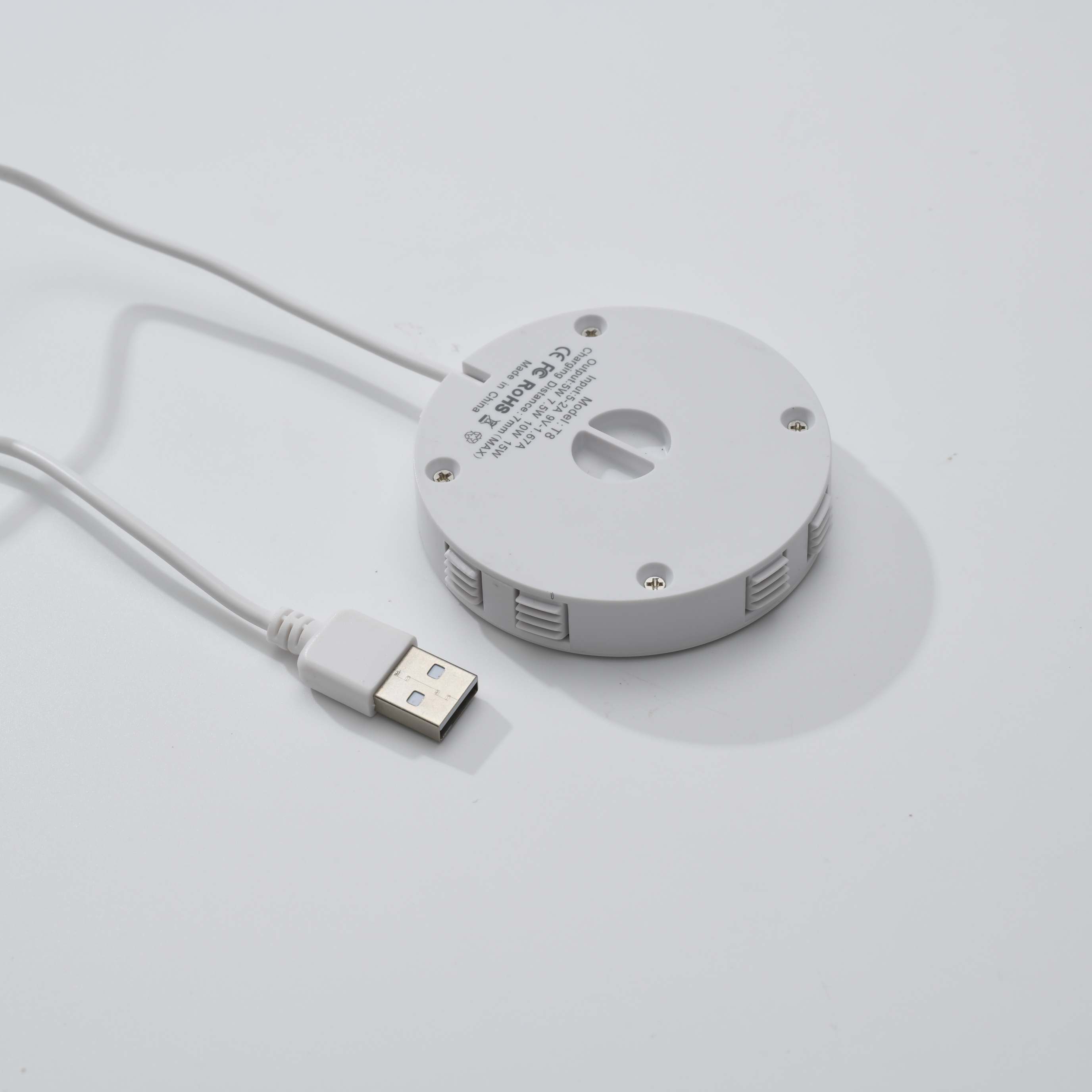
What Does Embedded Isolated Wireless Charger Mean?
What Does Embedded Mean?
Embedded means that the wireless charging module is designed to be installed inside or integrated into another product. Instead of using a standalone charging base, the charging module can be hidden beneath a suitable surface or incorporated into the device structure.
For example, an embedded wireless charger can be integrated into:
Automotive center consoles
Office desks
Bedside tables
Furniture
Smart Home devices
Electronic equipment
Vehicle charging systems
Consumer electronic products
What Does Isolated Mean?
In power electronics, isolated generally refers to electrical isolation between specified parts of a circuit. In an isolated wireless charger, the exact meaning and level of isolation depend on the circuit architecture, power supply design, and manufacturer's specifications.
Therefore, the term “isolated” should not automatically be interpreted as a universal safety certification or guarantee. For a specific wireless charging module, the electrical isolation characteristics should be confirmed from its technical specifications.
How Does an Embedded Wireless Charger Work?
An embedded wireless charger uses electromagnetic induction or a related wireless power transfer technology to transmit energy from a transmitter to a compatible receiving device.
The basic charging process can be simplified as:
Power Input → Charging Circuit → Transmitting Coil → Magnetic Field → Receiving Coil → Charging Circuit → Battery
1. Power Input
The wireless charging module receives electrical power from an external power source or the host device's power system.
2. Wireless Charging Circuit
The charging circuit converts and controls the incoming electrical energy so that it can be transferred through the wireless charging system.
3. Transmitting Coil
The transmitter coil generates an alternating electromagnetic field. The position and design of the coil are important for charging efficiency and alignment.
4. Receiving Coil
A compatible smartphone, earbud case, or other receiving device detects the electromagnetic field and converts the transferred energy back into electrical power.
5. Charging Control
The receiving device and wireless charging system manage the charging process according to their communication and power-management requirements.
What Are the Advantages of an Embedded Isolated Wireless Charger?
Space-Saving Design
One of the main benefits of an Embedded Isolated Wireless Charger is its compact installation method. Because the module can be installed inside a host product, it does not necessarily require a separate charging base.
Clean and Integrated Appearance
An embedded wireless charger can be concealed beneath a suitable surface, creating a cleaner and more integrated appearance. This is particularly useful for automotive interiors, furniture, and smart devices.
Cable-Free User Experience
Wireless charging allows compatible devices to be charged without connecting a charging cable directly to the device.
Users can simply place a compatible device in the designated charging area, provided that the charger and receiving device support the same wireless charging standard.
Flexible Product Integration
A wireless charging module can be incorporated into different types of products. Manufacturers can select the appropriate module according to available installation space, input power, charging requirements, and product structure.
Potential Electrical Isolation
Where the product incorporates an isolated power architecture, electrical isolation can help separate specified circuits. However, the actual isolation voltage, insulation method, and safety performance must be confirmed from the specific product design and specifications.
Where Are Embedded Wireless Chargers Used?
Automotive Applications
Embedded wireless chargers are widely suited to vehicle interiors. A charging module can be integrated into a center console, armrest, dashboard storage area, or another designated charging compartment.
This allows drivers and passengers to charge compatible smartphones without occupying a separate USB charging port.
Furniture
Wireless charging modules can be integrated into desks, bedside tables, conference tables, and other furniture products.
This creates convenient charging locations while keeping cables and charging accessories out of sight.
Smart Home Products
Smart speakers, smart furniture, control panels, and other connected products may incorporate a wireless charger module as an additional charging function.
Consumer Electronics
Portable electronic products and accessories can also incorporate wireless charging technology where the available space and power requirements are suitable.
What Is a Wireless Charging Module?
A Wireless Charging Module is the electronic assembly responsible for transferring electrical energy wirelessly to a compatible receiving device.
A typical module may include:
Charging control circuit
Transmitting coil
Power management components
Communication and control components
Protection circuitry
Thermal management components
The exact components depend on the charging standard, output power, physical dimensions, application, and product architecture.
Wireless Charger Module vs. Wireless Charger
A wireless charger module is generally intended to be integrated into another product, while a complete wireless charger may include a housing, surface, mounting structure, power supply, and other components needed for standalone operation.
For OEM applications, manufacturers often choose a module because it provides greater flexibility for product integration.
What Should You Consider When Choosing an Embedded Wireless Charger?
Input Voltage
The input voltage of the charger should match the power system of the host product. Automotive applications, consumer electronics, and industrial products may have different input requirements.
Charging Power
Charging power should be selected according to the target application and compatible receiving devices. Higher power does not necessarily mean better performance if the host product or receiving device cannot support it.
Installation Dimensions
For an embedded application, the module's length, width, height, coil position, and mounting structure are critical. The available installation space should be confirmed before selecting the module.
Coil Alignment
Wireless charging performance can be affected by the relative position between the transmitter and receiver coils. The embedded structure should therefore provide an appropriate charging area and positioning design.
Thermal Management
Wireless charging can generate heat during operation. When the module is installed inside another product, the available space for heat dissipation may be limited. The thermal conditions of the complete product should therefore be evaluated.
Protection Functions
Depending on the design, a wireless charging system may incorporate protection against conditions such as over-temperature, over-current, or foreign objects. The available protection functions should be confirmed according to the specific module specification.
Electrical Isolation Requirements
If isolation is required for a particular application, the manufacturer should clearly define the isolated circuits, isolation method, insulation requirements, and applicable test conditions rather than relying on the term “isolated” alone.
Can an Embedded Wireless Charger Be Customized?
Yes. An OEM Wireless Charger or Custom Wireless Charger can be developed according to the requirements of a specific host product.
Potential customization options include:
Module dimensions
Input voltage
Charging power
Coil size and position
Installation structure
Connector configuration
LED indicators
Protection functions
Housing design
Logo or branding
Custom electrical architecture
For embedded applications, customization is particularly useful because the available installation space and electrical system can vary significantly between products.
Embedded Wireless Charger vs. Standard Wireless Charger
| Feature | Embedded Wireless Charger | Standard Wireless Charger |
|---|---|---|
| Installation | Integrated into a host product | Usually used as a standalone device |
| Space | Designed for integrated installation | Requires external placement space |
| Appearance | Can be concealed or integrated | Visible charging device |
| Customization | Usually more flexible for OEM applications | Often based on a standard design |
| Applications | Cars, furniture, electronics, smart devices | Desks, homes, offices, travel |
Is an Embedded Isolated Wireless Charger Safe?
The safety of an Embedded Isolated Wireless Charger depends on the complete electrical and mechanical design, component selection, thermal management, installation method, and applicable product requirements.
If electrical isolation is part of the design, the actual isolation performance should be verified through the relevant technical specifications and testing procedures.
Users and manufacturers should also ensure that the wireless charger is compatible with the intended power source and receiving devices and that the module is installed according to the manufacturer's requirements.
Why Choose an Embedded Wireless Charger for OEM Products?
For OEM manufacturers, an embedded wireless charger can add wireless charging functionality without requiring a separate external charging accessory.
Its integrated design can help manufacturers:
Optimize product space
Create a cleaner appearance
Add wireless charging functionality
Reduce visible cables
Customize the installation structure
Integrate charging into existing product designs
This makes Custom Wireless Charger solutions suitable for automotive electronics, furniture, smart devices, and other products where integrated charging is required.
FAQ About Embedded Isolated Wireless Chargers
What is an Embedded Isolated Wireless Charger?
An Embedded Isolated Wireless Charger is a wireless charging solution designed to be integrated into another product and may incorporate electrical isolation between specified circuits, depending on its design.
What is an embedded wireless charger?
An embedded wireless charger is a charging module installed inside or integrated into a host product rather than being used as a separate charging pad.
What does isolated mean in a wireless charger?
In electrical engineering, “isolated” generally refers to electrical separation between specified circuits. The exact isolation characteristics depend on the wireless charger's circuit architecture and specifications.
Can an embedded wireless charger be used in a car?
Yes. Embedded wireless chargers can be integrated into automotive center consoles, dashboards, armrests, and other suitable locations, provided the module meets the vehicle's electrical, thermal, mechanical, and regulatory requirements.
Can I customize an embedded wireless charger?
Yes. An OEM wireless charger can be customized in areas such as dimensions, input voltage, charging power, coil position, connectors, installation structure, and other product requirements.
What is the difference between an embedded wireless charger and a wireless charging pad?
An embedded wireless charger is designed to be integrated into a host product, while a wireless charging pad is normally a standalone charging accessory placed on a desk, table, or other surface.
An Embedded Isolated Wireless Charger combines wireless charging technology with an integrated installation concept. It can be built into vehicles, furniture, electronic devices, smart products, and other equipment to provide a convenient and space-efficient charging solution.
The term “embedded” primarily describes the installation method, while “isolated” generally relates to the electrical architecture of the product. Because isolation requirements can vary between applications, the actual electrical specifications should always be confirmed with the manufacturer.
For OEM and ODM projects, an Embedded Wireless Charger, Wireless Charging Module, or Custom Wireless Charger can be developed around the host product's available space, input power, charging requirements, thermal conditions, and installation structure.