


What Is a DC–DC USB Converter?
A DC–DC USB Converter (also known as a DC to USB Converter or USB DC Converter) is a power module that converts a DC input voltage into a stable, standardized USB output voltage — typically 5V.
In simple terms: power sources like batteries, vehicle electrical systems, and solar panels often produce voltages that are unstable or incompatible with USB device standards. A DC-DC USB Converter acts as a "translator," turning that irregular DC power into a safe, stable current that smartphones, tablets, and other USB devices can recognize and use.
Compared with traditional AC Power Adapters, this type of module is smaller, more efficient, and easier to embed into custom electronic products — making it a standard component in many embedded hardware designs today.
Key Features and Advantages
Built around three core principles — stability, efficiency, and easy integration — the HJ-315AC delivers the following:
High Conversion Efficiency (≥95%)
With a working efficiency of 95% or higher, the HJ-315AC minimizes power loss and heat generation, staying stable even during long-term operation — ideal for energy-sensitive, always-on applications.
Dual USB Output (USB-A + USB-C)
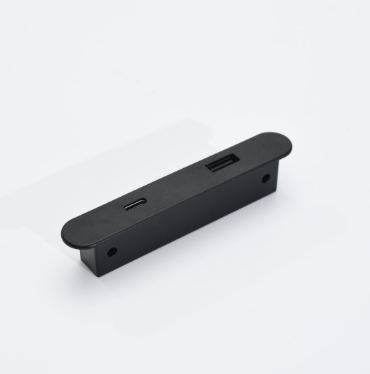
Featuring both USB-A and USB-C ports, the converter delivers a 5V 3A output with 15W total power, allowing two devices to be powered or charged simultaneously as long as the combined load stays within the 15W limit.
Four-Layer Protection System
Built-in overvoltage protection, short-circuit protection, overload protection, and temperature protection automatically respond to abnormal current or overheating conditions, safeguarding both the module and connected devices.
Compact Design, OEM-Ready
Its compact structure makes it easy to integrate into a wide range of end products and custom hardware. Output current, interface type, and protection parameters can all be customized to meet specific project requirements.
CE / RoHS Certified
The HJ-315AC is certified to CE and RoHS standards, meeting international safety and environmental requirements for global markets.
Materials & Construction
The core structure of the DC-DC USB Converter consists of an internal circuit board and a protective housing:
Circuit components: Inductors, capacitors, diodes, and other high-quality components — typically using copper, aluminum, and silicon — ensure stability and efficiency throughout the power conversion process.
Connectors: USB ports are generally made from high-strength plastic or metal, offering strong durability and corrosion resistance.
Housing: A compact overall structure allows the module to be embedded inside a wide range of end devices without taking up excessive installation space.
This combination of materials ensures long-term reliability while keeping the module lightweight and easy to integrate.
Product Specifications
| Item | Specification |
|---|---|
| Model | HJ-315AC |
| Input Voltage | DC 5V |
| Input Frequency | 50/60Hz |
| Output Voltage & Current | 5V 3A (A+C) |
| Output Power | 15W |
| Working Efficiency | ≥95% |
| Working Temperature | -20℃ to +50℃ |
| Storage Temperature | -20℃ to +80℃ |
| Humidity | 10%–90% RH |
| Protection Functions | Overvoltage, short-circuit, overload, temperature protection |
| Certification | CE / RoHS |
As a USB buck converter, the HJ-315AC uses internal voltage regulation to efficiently step down the input voltage and deliver a stable USB-standard output, ensuring safe and reliable power for all connected USB devices.
Typical Applications
Thanks to its compact structure and stable output performance, this DC-DC USB Converter is widely used in:
3C consumer electronics – everyday charging for smartphones, tablets, and similar devices
Smart Home devices – as a built-in power module for smart switches, control panels, and similar equipment
Embedded systems – integrated into custom hardware as a standardized power interface
Industrial control equipment – providing stable low-voltage DC power for industrial terminals and testing devices
Custom electronic projects – available for OEM customization based on project requirements
USB charging modules – embedded into charging stations, multi-port Chargers, and similar products
Whether for consumer products or industrial-grade solutions, this converter offers a mature answer to virtually any "DC to USB" power conversion need.
How to Use It
Check the input power specification – Make sure your DC power source matches the converter's input rating (DC 5V) to avoid abnormal operation.Connect your USB devices – Use the USB-A or USB-C port to connect the device you want to power; both ports can be used at the same time.Watch the total load – When using both ports simultaneously, keep the combined output under the 15W limit to maintain safe, efficient conversion.Mind the operating environment – Use within the -20℃ to +50℃ range, and avoid long-term storage outside the rated temperature and humidity range.Handle abnormalities promptly – If a device becomes noticeably hot or behaves unexpectedly, disconnect the power source and check for overload or wiring issues; contact the manufacturer if needed.
Frequently Asked Questions (FAQ)
What DC power sources can this converter be used with?As long as the input voltage matches the DC 5V specification, it can generally be used with batteries, vehicle power systems, and other regulated DC sources.
Can the USB-A and USB-C ports be used at the same time?Yes. Both ports can output simultaneously, but total power must not exceed 15W. The system intelligently adjusts output when multiple devices are connected, ensuring safe operation.
How efficient is this converter?Working efficiency is ≥95%, effectively reducing energy loss and heat generation — well suited to applications requiring long-term, stable operation.
Can this product be customized?Yes. Output current, interface type, and protection parameters can all be customized through OEM services based on specific project needs.
What safety protection features does it have?Built-in overvoltage, short-circuit, overload, and temperature protection respond quickly to abnormal conditions, protecting both the device and the user.
Is this product internationally certified?Yes. It is certified to CE and RoHS standards, meeting international safety and environmental requirements for export markets.
Industry Insight: Why DC-DC USB Conversion Is Becoming More Important
As industries like smart home technology, renewable energy (such as solar storage), and automotive electronics continue to grow, more and more end devices are drawing power directly from DC sources — batteries, solar panels, vehicle electrical systems — rather than traditional AC mains. This shift brings two clear trends:
Rising demand for miniaturized power modules – As devices become more compact, the space available for power components shrinks, driving demand for highly integrated solutions like the DC-DC USB Converter.Higher expectations for efficiency and safety – Especially in renewable energy and industrial settings, long-term stability, low energy loss, and multi-layer protection have become baseline requirements for power module selection.
For cross-border trade and e-commerce professionals, understanding these underlying technical principles makes it easier to communicate accurately with overseas customers — particularly in markets like Europe, North America, and Southeast Asia — about real-world use cases and technical requirements.
Looking for a reliable DC-DC USB power conversion solution for your smart home, 3C accessory, automotive, or renewable energy project? Contact our technical team today for customized quotes and selection guidance.