




A USB Power Supply Board is a compact electronic module designed to convert electrical power into a regulated DC output for charging devices and supplying power to electronic circuits. Commonly used in consumer electronics, embedded systems, DIY electronics, and industrial equipment, it provides a convenient solution for integrating USB power into different applications.
From a 15W USB Power Supply Board to an AC-DC USB Charger Module and a USB-C Power Delivery Board, different designs support various output voltages, charging requirements, and installation methods. Understanding their functions and differences helps engineers and product manufacturers select the right USB power solution.
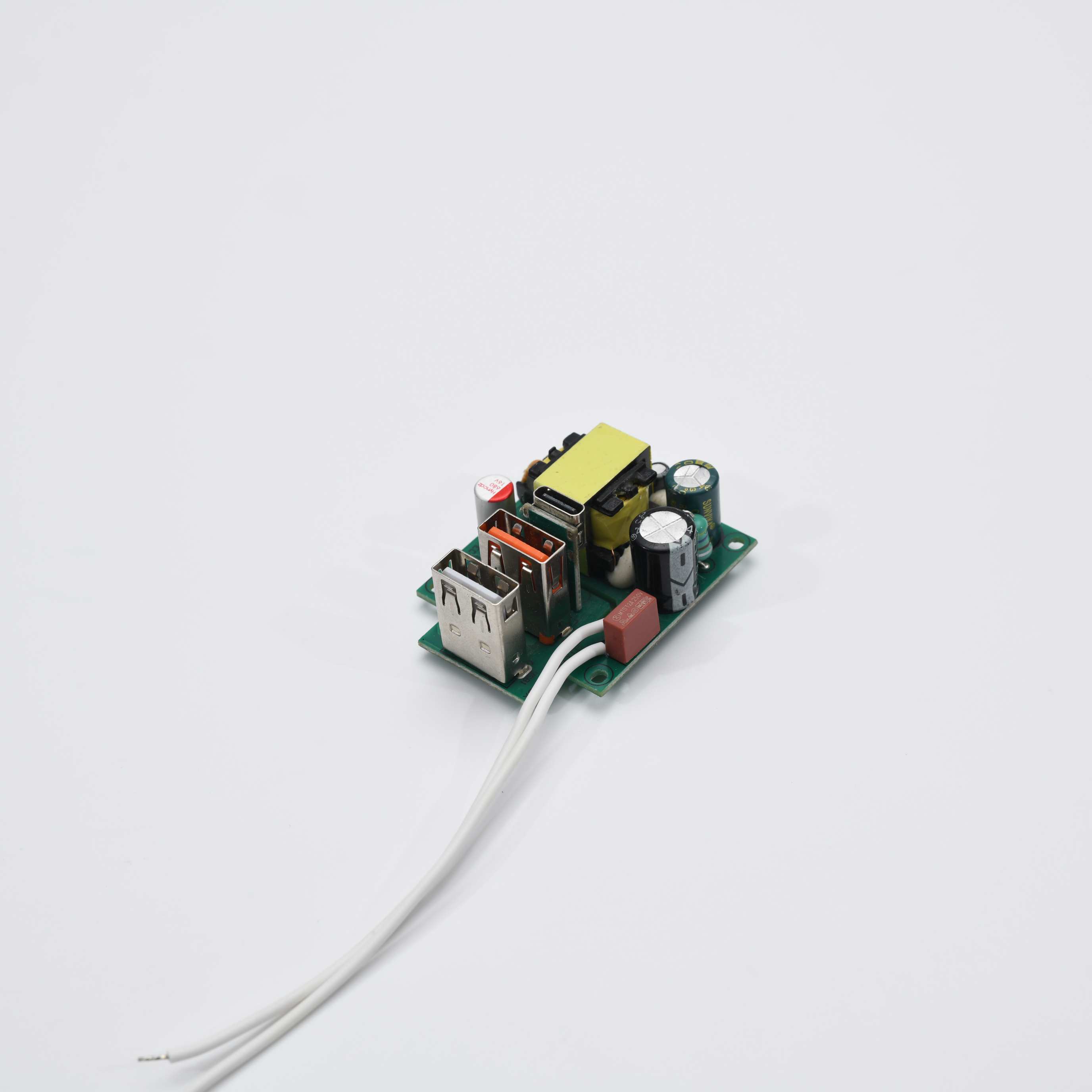
What Is a USB Power Supply Board?
A USB Power Supply Board is a circuit board that converts an input power source into a stable DC voltage through electronic power conversion components. It typically includes power management ICs, voltage regulation circuits, protection components, and USB output connectors.
Depending on its design, a USB power supply board can support USB-A or USB-C connections and provide power for smartphones, development boards, embedded devices, and other electronic products.
Some boards convert AC mains power into low-voltage DC power, while others regulate an existing DC input. Therefore, the input voltage range, output voltage, current, and conversion topology should be checked before selecting a module.
Different Types of USB Power Supply Boards
USB power supply boards come in different configurations to meet charging and power distribution requirements.
15W USB Power Supply Board
A 15W USB Power Supply Board is designed to provide up to 15 watts of output power, depending on its rated voltage and current.
For example, a 5V/3A output provides 15W of power. Some designs may also support other voltage and current combinations depending on the charging protocol and circuit configuration.
Common applications include:
USB charging ports in electronic devices
Embedded power supply systems
Small consumer electronics
Development boards and DIY projects
Compact charging equipment
When choosing a 15W module, it is important to verify its continuous output capability, thermal performance, and protection functions.
USB Charger Board
A USB Charger Board is a circuit board designed to provide electrical power for charging USB-powered devices.
It may feature a USB-A or USB-C output port and include voltage regulation, current limiting, and overcurrent protection. Some USB charger boards also support charging identification or fast-charging protocols to communicate with compatible devices.
These boards are commonly integrated into charging adapters, electronic products, power distribution systems, and customized charging equipment.
AC-DC USB Charger Module
An AC-DC USB Charger Module converts alternating current (AC) from a mains power source into regulated direct current (DC) suitable for USB charging.
A typical module includes an AC-DC switching power supply circuit, rectification components, transformers, voltage regulation, and safety protection components.
Its main advantages include:
Direct conversion from AC input to DC output
Compact design for embedded applications
Regulated output voltage
Integration into electronic products
Support for different USB charging configurations
Because this type of module operates with potentially hazardous mains voltage, electrical isolation, insulation distances, temperature rise, and applicable safety certifications must be carefully considered.
USB-C Power Board
A USB C Power Board is a power supply board that uses a USB Type-C connector for power input or output.
USB-C offers a reversible connector design and supports different power delivery capabilities depending on the hardware and communication protocol implemented in the board.
USB-C power boards can be used in embedded electronics, portable devices, development projects, and modern charging systems.
USB-C Power Delivery Board
A USB-C Power Delivery Board supports the USB Power Delivery (USB PD) protocol, which allows compatible power sources and devices to negotiate suitable voltage and current levels.
Unlike a basic USB power board that may provide a fixed 5V output, a USB-C PD board can support multiple power profiles when the controller, power conversion circuit, and connected equipment are designed accordingly.
Typical applications include:
USB-C fast charging systems
Embedded electronic equipment
Portable power solutions
Development and testing platforms
USB-C powered consumer devices
The actual output capability depends on the board's power rating, PD controller, input source, and supported power profiles.
Fast Charging Module
A Fast Charging Module is designed to provide higher charging power or optimized charging performance for compatible electronic devices.
Depending on the implementation, it may support protocols such as USB Power Delivery (USB PD) or other fast-charging standards.
A fast charging module generally includes a charging protocol controller, power conversion circuit, and protection components. The connected device and power source must also support the same charging protocol to achieve the expected charging performance.
Embedded USB Charger Board for Electronic Products
An Embedded USB Charger Board is designed to be integrated directly into an electronic product rather than used as a standalone external adapter.
It can provide a built-in USB charging interface for devices such as Smart Home products, industrial controllers, electronic instruments, and consumer electronics.
Compared with an external charger, an embedded solution can simplify product integration and reduce the need for separate power accessories.
When selecting an embedded USB charger board, engineers should consider:
Input power requirements: Confirm whether the system uses AC mains power or a low-voltage DC source.
Output power: Select a board that can continuously provide the voltage and current required by the connected device.
Installation space: Check PCB dimensions, connector position, mounting holes, and component height.
Thermal management: Ensure the module can operate safely within the product enclosure and expected ambient temperature.
Electrical protection: Consider overcurrent, overvoltage, short-circuit, and overtemperature protection.
Battery Charger Board vs. USB Power Supply Board
A Battery Charger Board and a USB Power Supply Board may both use USB as an input or output interface, but they serve different purposes.
A USB power supply board primarily provides regulated electrical power to a connected load. A battery charger board manages the charging process for a rechargeable battery.
| Feature | USB Power Supply Board | Battery Charger Board |
|---|---|---|
| Main function | Provides regulated DC power | Charges rechargeable batteries |
| Typical output | Regulated voltage and current | Controlled charging current and voltage |
| Main application | Electronic devices and circuits | Battery-powered equipment |
| Key components | Power conversion and regulation circuits | Charging ICs and battery management circuits |
| Protection | Overcurrent, overvoltage, short circuit | Battery overcharge, overcurrent, and temperature protection, depending on design |
Some products combine both functions. For example, a USB input may supply power to a battery charging circuit, which then manages the charging process for a lithium-ion or lithium-polymer battery.
The correct module depends on whether the application needs a stable power output, battery charging, or both.
USB-C Breadboard Power Supply and Power Supply on Breadboard
A USB-C Breadboard Power Supply is a compact power module designed to provide electrical power to a solderless breadboard or prototyping circuit.
It allows engineers, students, and electronics enthusiasts to power development projects through a USB connection without building a separate power supply circuit.
A typical breadboard power supply module may include:
USB-C or other DC input connectors
Voltage regulation circuits
Selectable output voltage, depending on design
Short-circuit protection, if supported
Pin headers compatible with breadboard connections
How Does a Power Supply on Breadboard Work?
A Power Supply on Breadboard provides regulated voltage to the breadboard's power rails, allowing connected electronic components to receive power.
The general process is straightforward:
Connect a compatible USB power source to the module.
The module receives the input power through its USB connector.
The voltage regulation circuit converts the input into the required output voltage.
The regulated voltage is supplied to the breadboard power rails.
Electronic components connected to the rails receive power for testing and development.
Before connecting components, check the module's output voltage, current limit, polarity, and breadboard compatibility. Never assume that every USB-C breadboard module supports USB Power Delivery or adjustable output voltage.
Key Features to Consider When Choosing a USB Power Supply Board
Choosing the right USB power module requires more than checking its maximum wattage. The following factors can help engineers evaluate different products.
Output Voltage and Current
Confirm the rated output voltage and maximum current required by the application. A 15W USB power supply board, for example, may provide 5V/3A or another supported voltage-current combination.
Charging Protocol Compatibility
For fast charging applications, check whether the module supports USB PD or other required charging protocols. Protocol support must be compatible with the connected device.
Power Conversion Efficiency
Higher conversion efficiency reduces energy loss and heat generation. This is especially important for compact embedded products with limited space for thermal management.
Protection Functions
Depending on the application, useful protection functions may include:
Overcurrent protection
Overvoltage protection
Short-circuit protection
Overtemperature protection
Input surge protection
PCB Design and Installation
Consider the board's dimensions, connector type, mounting method, component layout, and electrical interface. These details affect how easily the module can be integrated into the final product.
Applications of USB Power Supply Boards
USB power supply boards are used across a wide range of electronic applications.
Consumer Electronics: Provide charging power for compact electronic devices, smart home products, and portable equipment.
Industrial Electronics: Supply regulated DC power to control boards, sensors, communication modules, and embedded systems.
Development and Prototyping: USB-C breadboard power supplies provide convenient power for circuit testing, Arduino projects, and other electronic development platforms.
Charging Equipment: USB charger boards and fast charging modules can be integrated into charging stations and customized electronic products.
Battery-Powered Devices: Battery charger boards can work with USB power inputs to manage rechargeable battery charging.
Frequently Asked Questions
1. What is a USB power supply board used for?
A USB Power Supply Board converts an input power source into regulated DC power for USB devices, embedded electronics, and development circuits. Its specific function depends on the input source and output configuration.
2. What is a 15W USB power supply board?
A 15W USB Power Supply Board is a module with a maximum rated output power of 15 watts. For example, it may provide 5V at 3A, depending on its design.
3. What is the difference between a USB charger board and an AC-DC USB charger module?
A USB Charger Board is a general term for a board that provides USB charging power. An AC-DC USB Charger Module specifically converts AC mains input into regulated DC output for USB charging.
4. Does a USB-C power board support fast charging?
Not necessarily. A USB-C connector alone does not guarantee fast charging. The board must include the required charging protocol controller and power conversion capability, and the connected device must support the same protocol.
5. What is a USB-C Power Delivery Board?
A USB-C Power Delivery Board is a module that supports the USB PD communication protocol, allowing compatible devices and power sources to negotiate suitable voltage and current levels.
6. Can a USB power supply board charge a lithium battery directly?
Not necessarily. A standard USB power supply board provides electrical power but does not automatically manage battery charging. A suitable battery charger circuit with the correct charging profile and protection functions is required.
7. What is a USB-C breadboard power supply used for?
It provides power to breadboard circuits during electronics prototyping. It is commonly used for testing microcontrollers, sensors, and other low-voltage electronic components.
8. How do I choose the right USB power supply board?
Consider the input voltage, output voltage, maximum current, rated power, charging protocol, protection functions, PCB dimensions, and intended application. For embedded products, also evaluate thermal performance and safety requirements.
Choose the Right USB Power Supply Board for Your Project
Whether you need a 15W USB Power Supply Board, USB Charger Board, AC-DC USB Charger Module, USB-C Power Delivery Board, or Embedded USB Charger Board, selecting the right design is essential for stable power delivery and reliable product performance.
A suitable USB power solution should match your electrical requirements, installation space, charging protocol, and operating environment.
Contact us to discuss your project requirements and find a suitable USB power supply solution for your electronic products.